
 X / Twitter
 Facebook
 LinkedIn
 Reddit
About v-Lawyer
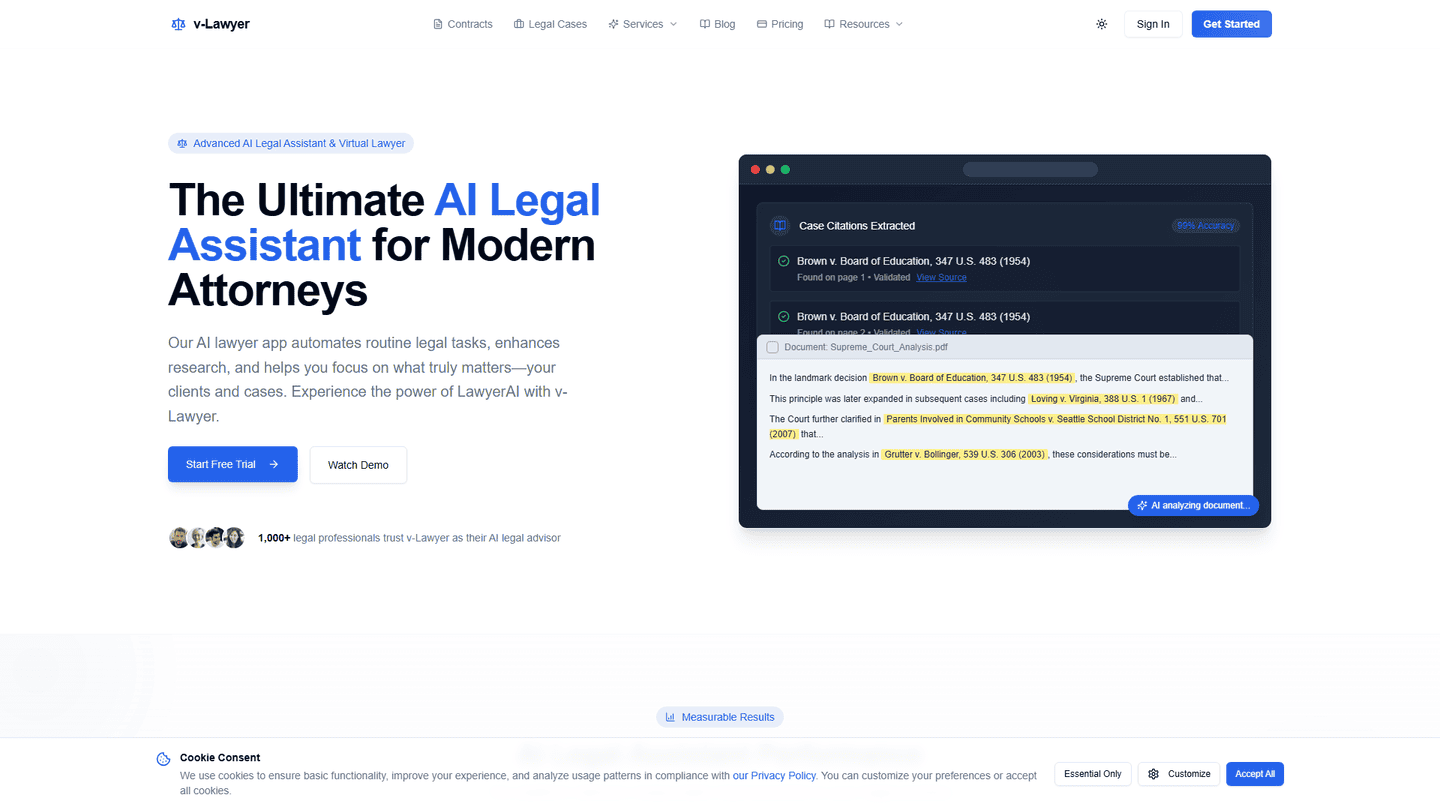
v-Lawyer is an AI-powered legal research tool designed to assist legal professionals. It offers quick access to relevant case laws and legal documents, streamlining research and improving efficiency.
Pros
- Faster legal research
- improved efficiency
Cons
- Potential for AI hallucinations or inaccuracies
- Lacks human judgment and empathy
- Requires human oversight and verification
- Data privacy concerns with sensitive legal documents
- Limited to available training data
Common Questions
What is v-Lawyer?
v-Lawyer is an AI-powered legal research tool designed to assist legal professionals. It provides quick access to relevant case laws and legal documents, streamlining research and improving efficiency for modern attorneys.
Who is v-Lawyer designed for?
v-Lawyer is specifically created for legal professionals and modern attorneys. It functions as an ultimate AI legal assistant to support their legal research tasks.
What are the main benefits of using v-Lawyer?
The primary benefits of v-Lawyer include significantly faster legal research and improved overall efficiency. It helps streamline access to crucial legal documents and case laws.
What kind of tasks does v-Lawyer help with?
v-Lawyer primarily assists with legal research tasks by offering quick access to relevant case laws and legal documents. It is an AI legal assistant designed to streamline this process for legal professionals.
What are the potential drawbacks or limitations of v-Lawyer?
Potential drawbacks include the risk of AI hallucinations or inaccuracies, and it lacks human judgment and empathy. Additionally, there are data privacy concerns with sensitive legal documents and its capabilities are limited to available training data.
Does v-Lawyer require human oversight?
Yes, v-Lawyer requires human oversight and verification for all its outputs. This is crucial due to the potential for AI inaccuracies and the absence of human judgment.
Can v-Lawyer replace a human attorney's judgment?
No, v-Lawyer lacks human judgment and empathy, and therefore cannot replace a human attorney's critical thinking. It serves as an assistant tool, requiring human verification for accuracy and appropriateness.



