 AI Tool Buzz
Google Translate Unlocks Universal Communication: Live Speech Translation Comes to All Headphones
By: @devadigax
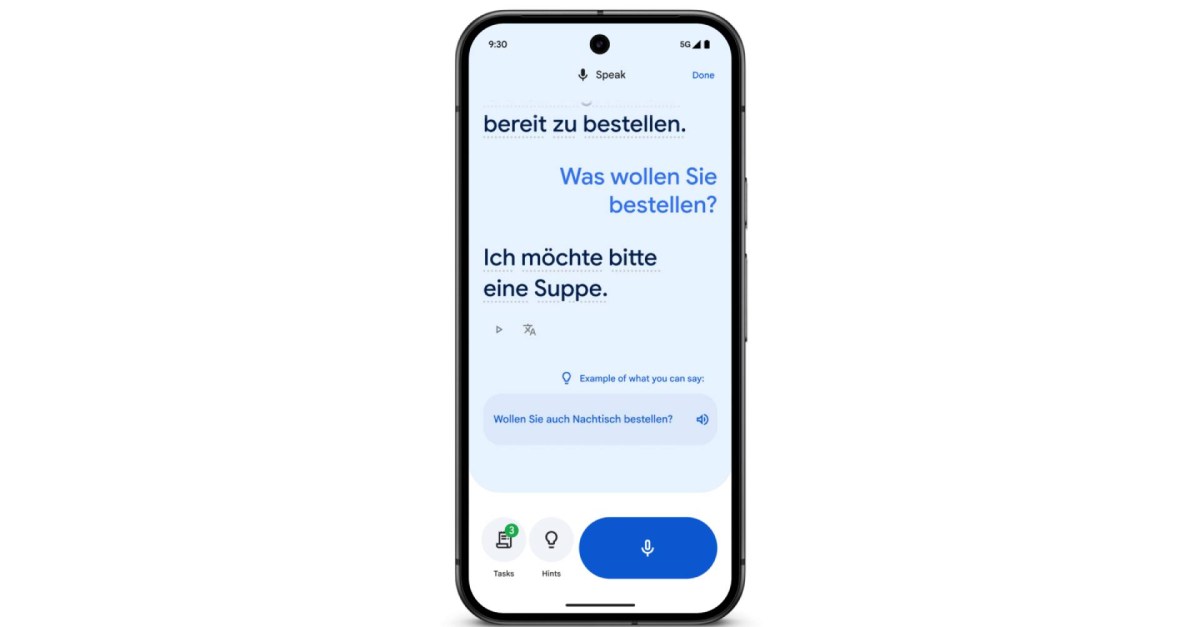
In a significant leap towards a truly connected world, Google Translate is rolling out a groundbreaking update that democratizes real-time speech translation. What was once an exclusive feature for Google's Pixel Buds users is now available to anyone with a compatible Android phone and, crucially, *any* pair of headphones. This update, which supports over 70 languages and is launching in beta today, promises to dismantle language barriers for millions, transforming travel, international business, and personal connections.
For years, the dream of seamless, instantaneous communication across linguistic divides has been a staple of science fiction. While Google Translate has steadily chipped away at these barriers with text, image, and basic voice translation, the live, conversational speech translation, delivered directly into your ear, represents a profound shift. Previously, this "interpreter mode" was a marquee feature for Google's own Pixel Buds, showcasing the tight integration between hardware and software. By extending this capability to virtually any headphones, Google is signaling its commitment to making advanced AI tools universally accessible, rather than tethered to proprietary ecosystems.
The user experience is designed for intuitive interaction. Imagine engaging in a conversation with someone speaking a different language. With the Google Translate app running on a compatible Android phone and your headphones connected, the app listens to the foreign speaker, processes their words through its powerful neural machine translation engine, and then relays the translated speech directly into your ear in near real-time. Conversely, when you speak, your words are translated and played aloud through your phone's speaker, allowing the other person to understand. This elegant solution creates a natural conversational flow, minimizing the awkward pauses and manual inputs typically associated with translation apps.
Underpinning this impressive feat is a complex symphony of artificial intelligence and machine learning technologies. At its core are advanced speech recognition models that accurately transcribe spoken words, even amidst background noise and varying accents. This transcribed audio is then fed into Google's state-of-the-art Neural Machine Translation (NMT) systems, which are trained on vast datasets of human language to produce highly nuanced and contextually appropriate translations. Finally, sophisticated text-to-speech synthesis converts the translated text back into natural-sounding audio, completing the real-time loop. The sheer computational power and algorithmic sophistication required to perform these operations instantaneously for over 70 languages is a testament to Google's pioneering work in AI.
This latest development is a natural evolution of Google's long-standing vision for language accessibility. From its early days as a simple web-based translation tool, Google Translate has grown into a powerhouse, leveraging the company's immense data and AI research to continually improve accuracy and expand its capabilities. This move to universal headphone compatibility builds upon previous innovations like camera translation and offline translation, reinforcing the idea that language should never be an impediment to understanding or connection. It underscores Google's belief that AI should serve to augment human capabilities and foster global understanding.
The practical implications of this update are enormous. Travelers will no longer feel isolated in foreign lands, able to confidently navigate markets, engage with locals, and fully immerse themselves in new cultures. International business professionals can conduct more fluid and effective meetings, breaking down communication silos that often hinder global collaboration. For individuals with hearing impairments, or those learning a new language, this tool could offer a significant boost in comprehension and confidence. Moreover, it holds immense potential for humanitarian efforts, enabling aid workers to communicate more effectively with diverse populations in crisis zones. The ability to bridge linguistic gaps on the fly could foster greater empathy and cooperation on a global scale.
While the feature is rolling out in beta, indicating that Google is still refining the experience, its immediate availability marks a significant milestone. Users will need a compatible Android phone and the updated Google Translate app to access this functionality. The "beta" tag suggests that Google will be closely monitoring user feedback to further enhance accuracy, reduce latency, and potentially expand the feature set. As with any AI-driven translation, nuances, idiomatic expressions, and highly specialized jargon can still pose challenges, but the continuous learning models employed by Google mean that accuracy will only improve over time.
Looking ahead, this move sets the stage for even more integrated and seamless communication experiences. We can anticipate further refinements in conversational flow, perhaps even more sophisticated context awareness, and deeper integration with other smart devices. The vision of a truly multilingual world, where language is no longer a barrier but a rich tapestry of human expression, is becoming increasingly tangible. Google Translate's universal real-time speech translation is not just an update; it's a powerful tool that brings us closer to that future, empowering individuals to connect, understand, and thrive in an increasingly globalized society.
For years, the dream of seamless, instantaneous communication across linguistic divides has been a staple of science fiction. While Google Translate has steadily chipped away at these barriers with text, image, and basic voice translation, the live, conversational speech translation, delivered directly into your ear, represents a profound shift. Previously, this "interpreter mode" was a marquee feature for Google's own Pixel Buds, showcasing the tight integration between hardware and software. By extending this capability to virtually any headphones, Google is signaling its commitment to making advanced AI tools universally accessible, rather than tethered to proprietary ecosystems.
The user experience is designed for intuitive interaction. Imagine engaging in a conversation with someone speaking a different language. With the Google Translate app running on a compatible Android phone and your headphones connected, the app listens to the foreign speaker, processes their words through its powerful neural machine translation engine, and then relays the translated speech directly into your ear in near real-time. Conversely, when you speak, your words are translated and played aloud through your phone's speaker, allowing the other person to understand. This elegant solution creates a natural conversational flow, minimizing the awkward pauses and manual inputs typically associated with translation apps.
Underpinning this impressive feat is a complex symphony of artificial intelligence and machine learning technologies. At its core are advanced speech recognition models that accurately transcribe spoken words, even amidst background noise and varying accents. This transcribed audio is then fed into Google's state-of-the-art Neural Machine Translation (NMT) systems, which are trained on vast datasets of human language to produce highly nuanced and contextually appropriate translations. Finally, sophisticated text-to-speech synthesis converts the translated text back into natural-sounding audio, completing the real-time loop. The sheer computational power and algorithmic sophistication required to perform these operations instantaneously for over 70 languages is a testament to Google's pioneering work in AI.
This latest development is a natural evolution of Google's long-standing vision for language accessibility. From its early days as a simple web-based translation tool, Google Translate has grown into a powerhouse, leveraging the company's immense data and AI research to continually improve accuracy and expand its capabilities. This move to universal headphone compatibility builds upon previous innovations like camera translation and offline translation, reinforcing the idea that language should never be an impediment to understanding or connection. It underscores Google's belief that AI should serve to augment human capabilities and foster global understanding.
The practical implications of this update are enormous. Travelers will no longer feel isolated in foreign lands, able to confidently navigate markets, engage with locals, and fully immerse themselves in new cultures. International business professionals can conduct more fluid and effective meetings, breaking down communication silos that often hinder global collaboration. For individuals with hearing impairments, or those learning a new language, this tool could offer a significant boost in comprehension and confidence. Moreover, it holds immense potential for humanitarian efforts, enabling aid workers to communicate more effectively with diverse populations in crisis zones. The ability to bridge linguistic gaps on the fly could foster greater empathy and cooperation on a global scale.
While the feature is rolling out in beta, indicating that Google is still refining the experience, its immediate availability marks a significant milestone. Users will need a compatible Android phone and the updated Google Translate app to access this functionality. The "beta" tag suggests that Google will be closely monitoring user feedback to further enhance accuracy, reduce latency, and potentially expand the feature set. As with any AI-driven translation, nuances, idiomatic expressions, and highly specialized jargon can still pose challenges, but the continuous learning models employed by Google mean that accuracy will only improve over time.
Looking ahead, this move sets the stage for even more integrated and seamless communication experiences. We can anticipate further refinements in conversational flow, perhaps even more sophisticated context awareness, and deeper integration with other smart devices. The vision of a truly multilingual world, where language is no longer a barrier but a rich tapestry of human expression, is becoming increasingly tangible. Google Translate's universal real-time speech translation is not just an update; it's a powerful tool that brings us closer to that future, empowering individuals to connect, understand, and thrive in an increasingly globalized society.